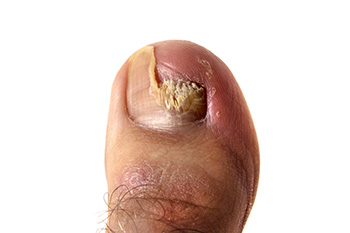
Toenail fungus can begin with a change in the color of a nail. A white or yellow spot may appear before the nail becomes thicker or brittle. The nail might crack, lift from the skin, or collect material underneath. This infection develops when fungi enter the nail or openings in nearby skin. It frequently affects the big toe or second toe. Although some people feel no discomfort, others develop pain that makes standing or walking difficult. The appearance of an infected nail can cause embarrassment. Without treatment, the infection can spread to other nails.
Toenail fungus is contagious and can pass between people through contact with infected skin or nails. Shared nail clippers and towels can carry the fungus. Warm, damp public spaces, like locker rooms and pool decks, create opportunities for exposure. Athlete's foot, a fungal infection of the skin, can spread into a toenail. Having dirty nails alone does not cause this condition. Changes in nail color do not necessarily mean a fungus is present, however. A podiatrist can examine the affected nail and collect a sample for testing to confirm the diagnosis.
Toenail fungus rarely clears without treatment because fungi can remain inside and beneath the nail. Scraping or filing the surface does not remove the infection. A podiatrist can prescribe antifungal medications applied to the nail or taken by mouth. The choice depends on the extent of infection and the patient's health. Treatment can clear the fungus before the nail looks normal again. Toenails grow slowly, so a healthy-looking big toenail may take a year or longer to return. Early diagnosis makes treatment more effective and helps prevent spread. If you have symptoms of toenail fungus, it is suggested that you schedule an appointment with a podiatrist for diagnosis and treatment.
For more information about treatment, contact Imaze Marian Davis, DPM of Marian Davis, DPM, PA. Our doctors can provide the care you need to keep you pain-free and on your feet.
Toenail Fungus Treatment
Toenail fungus is a condition that affects many people and can be especially hard to get rid of. Fortunately, there are several methods to go about treating and avoiding it.
Antifungals & Deterrence
Oral antifungal medicine has been shown to be effective in many cases. It is important to consult with a podiatrist to determine the proper regiment for you, or potentially explore other options.
Applying foot powder on the feet and shoes helps keep the feet free of moisture and sweat.
Sandals or open toed shoes – Wearing these will allow air movement and help keep feet dry. They also expose your feet to light, which fungus cannot tolerate. Socks with moisture wicking material also help as well.
If you have any questions please contact our office located in Miami, FL . We offer the newest diagnostic and treatment technologies for all your foot and ankle needs.